The World's Strangest Boulder Fields: Rocks That Ring Like Bells on Four Continents
Somewhere right now, on at least four continents, there's a field of ordinary-looking rocks that do something rocks are not supposed to do: ring. Not crunch, not thud — ring, clear and bell-like, the second you tap them with a hammer. And in every single case, from Pennsylvania to the Namib Desert, scientists have poked, measured, and studied these boulders for decades and still can't fully explain why only some of them do it.
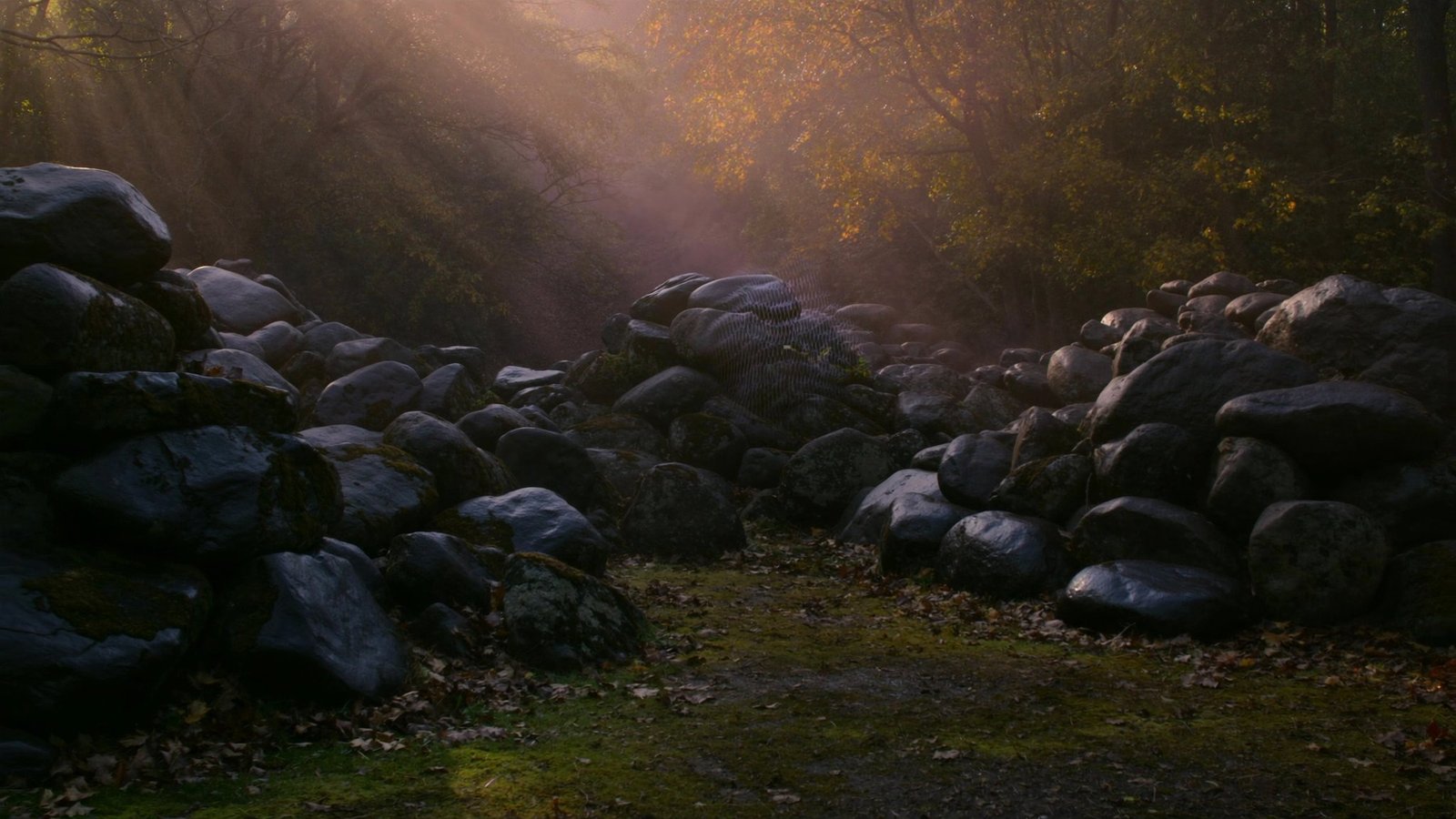
Consider this your passport to the strangest rock collection on Earth.
Stop 1: Pennsylvania, USA — The Original Party Trick
Tucked into 128 acres of woodland in Upper Black Eddy, Bucks County, Ringing Rocks Park has a seven-acre field stacked ten feet deep with boulders of diabase, a dense, iron-rich rock that formed roughly 175 million years ago and got shattered by freeze-thaw cycles at the tail end of the last Ice Age, around 12,000 years ago.
Grab a hammer (bringing your own is a local tradition) and start tapping, and you'll notice something strange fast: only about one-third of the rocks actually ring. The other two-thirds, sitting in the exact same pile, made of what looks like the exact same rock, just go thud. Acoustics researchers have run real instrumented studies out there, complete with microphones and spectrum analyzers. The leading theories involve internal stress, how each boulder is balanced against its neighbors, and subtle weathering differences on the rock's outer surface. None of them explain every rock.
Long before geologists showed up with equipment, the Lenape people who lived in the region reportedly attached spiritual significance to the boulders, and later visitors added their own folklore: healing powers, mystical energy, even claims of compasses spinning nearby (that part's real, just not mystical — it's the iron in the rock).
Stop 2: The Namib Desert, Namibia — The Desert That Twangs
Drive along Welwitschia Drive in Namibia's Namib-Naukluft area and you'll find boulders of dolerite, another dense, iron-heavy volcanic rock, poking up out of the dunes. Strike them together or with a mallet, and they produce a distinctive metallic "twang," which locals have long called the "singing stones."
The mechanism is the same basic idea as Pennsylvania's rocks: high iron content enhancing the rock's ability to vibrate and resonate, but the setting couldn't be more different. Instead of a shaded forest floor, you're standing in one of the oldest, driest deserts on the planet, banging on rocks that have been sitting exposed to that heat for who knows how long.
Stop 3: Querétaro, Mexico — The Bells That Buried an Emperor
Cerro de las Campanas ("Hill of the Bells") in Querétaro City gets its name from phonolite, literally "sounding stone" — a rare, low-silica volcanic rock that rings with a metallic clink when struck. Here's the kicker: only one specific type of rock on the entire hill is phonolite. Everything else is an ordinary look-alike, so visitors genuinely have to hunt and tap their way through a pile of impostors before finding one that sings. Souvenir hunters have taken so many pieces over the decades that genuine ringing phonolite is reportedly getting harder to find on the hill itself.
The hill's fame isn't purely acoustic, either. This is the exact spot where a firing squad executed Emperor Maximilian I of Mexico, along with Generals Miguel Miramón and Tomás Mejía, on June 19, 1867, ending the Second Mexican Empire and French intervention in Mexico. Cerro de las Campanas is both a genuine geological curiosity and a somber historical landmark — a hill that literally rings, and figuratively echoes through Mexican history. (Yes, that pun was sitting right there.)
Stop 4: Kiandra, New South Wales, Australia — The Rocks Nobody Bothered to Sign
Near Pollocks Creek in the Snowy Mountains, at a plain highway turnoff, sits an unassuming pile of granite boulders that ring when you tap them with a stone or hammer. No visitor center, no plaque, no gift shop — just rocks by the side of the road that happen to make music if you're paying enough attention to pull over. Some accounts suggest road crews shifted or partially quarried the boulders decades ago, which only muddies the question of whether their arrangement is natural or an accident of roadwork. Like every other stop on this tour, nobody has definitively cracked why these ring while countless identical-looking granite boulders nearby stay silent.
So... Why Does This Keep Happening?
The phenomenon of ringing, sonorous, or "lithophonic" rocks has been documented on nearly every continent. Beyond the four stops on this tour, add the Musical Stones of Skiddaw in England's Lake District and a ringing stone on Scotland's Isle of Tiree to the list.
The leading explanation is that a combination of factors — high iron content, internal stress within the rock, and how each boulder rests against its neighbors — lets two seemingly identical rocks react in totally different ways when struck. But "some mix of factors we haven't fully isolated" is, notably, not the same as an actual answer. Actual scientists with proper equipment have studied every single field on this list, and every single one still comes with an asterisk.
That's the best kind of mystery to end a tour on: not a legend, not an ancient-aliens theory, but something real and repeatable that you can go verify yourself with a hammer — and that still, somehow, keeps outrunning the people studying it.
Sources used in research:
- WITF: The Science and Mystery of Pennsylvania's Ringing Rocks
- Acentech: Investigating Ringing Rocks
- Pennsylvania Center for the Book: If Rocks Could Sing
- Wikipedia: Ringing rocks
- Sharon A. Hill: Ringing rocks and sonorous stones
- Atlas Obscura: Cerro de las Campanas
- Wikipedia: Cerro de las Campanas
- Bega District News: The ringing rocks of Kiandra